
How to book 80 to 500+ qualified sales meetings a year
Booking 80 to 500+ qualified meetings a year takes fresh data, daily-managed sending, and disciplined reply handling, not volume alone. This guide breaks down the throughput math by tier, offer, and event calendar.
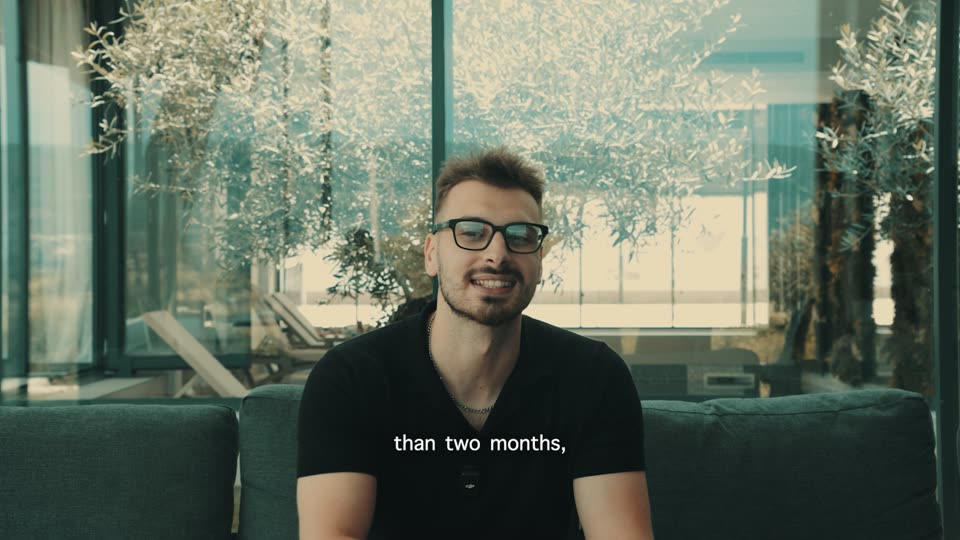 Ilija AndrićFounder, Behavio Group
#How do you book qualified sales meetings at scale?
Booking qualified sales meetings at scale comes down to finding the one ceiling that is leaking meetings and lifting itnot pushing harder on every stage at once. We are Behavio Group (a B2B lead generation and appointment setting firm), and the founder writing this is Ilija Andrić. Across our campaigns, a year's meeting total is never throttled by effort everywhere. It is throttled by a single binding constraint, and the work is locating it.

Picture five ceilings stacked above your calendar: offer economics, event access, deliverability headroom, reply-handling capacity, and closing capacity. Your annual number stops at the lowest one. Add more sourced contacts while reply handling is the leak and nothing moves, because the contacts pile up unworked. This is why two founders on identical spend book wildly different totals.
A qualified meeting (a booked call with a prospect who clears your deal-size and authority bar) is the unit being counted, which is why the floor sits at 80 rather than 800. Raw interest is cheap. The discipline that keeps the count honest is appointment setting for high-ticket B2Band it stops volume from quietly diluting quality.
#Why does event access set the ceiling on volume?
Event access caps your sourced volume because the conference calendar, not your appetite, decides how many fresh audiences you can reach in a year. We buy tickets to industry conferences, capture in-market attendees on the floor, enrich them, and launch outbound before list brokers resell that audience. Each event is one launch window. Eight strong events a year supports a steady cadence; two events clusters the whole year into two bursts.
This is the ceiling founders most often misread as an effort problem. A thin niche with two relevant conferences will land near 80 qualified meetings no matter how hard the engine runs, whereas the iGaming calendar, dense with operator and supplier events, supports far more windows. Mapping the year's events before you commit to a target is the operational move covered in B2B lead generation for founders. Meetings sourced live, never bought.
- Map every relevant conference for your ICP across the next twelve months
- Assign each event a launch window in the days immediately after it ends
- Stagger the windows so deliverability and reply handling never overload in one week
- Reconcile sourced volume against the target each quarter and re-plan the back half
#How does deliverability quietly cap the whole number?
Deliverability sets a hard ceiling because an email in the spam folder cannot earn a reply, no matter how good the copy or how fresh the contact. This is the constraint that hides best, since the sends still leave and the dashboard still shows volume. What it does not show is how many landed in the primary inbox versus nowhere a human will read them.
The mechanism is sender reputation. Push send volume past what a warmed domain can carry, or let bounce rate creep over 3%, and the mailbox provider throttles you. Then every downstream number, reply rate through booked meetings, drops at once. We hold this ceiling with domain warm-up, authentication, and per-domain send limits, so the reply rate the data deserves is the reply rate it gets.
Here is the trap to avoid. A founder seeing slow results assumes the copy is weak and rewrites it five times, when the real ceiling is a cold domain dumping half the sends into spam. Rewriting copy that never reached an inbox is motion without progress. Diagnose the inbox-placement ceiling before you blame the message.
Tier 1 at $3,500/mo = $42,000/yr. Per-meeting figures are that fee divided by the annual band, illustrative of the spread, not a guarantee.
#How do show rate and closing capacity gate booked meetings?
Show rate and closing capacity are the last two ceilings, and they delete meetings after you have already paid to book them. Show rate (the percentage of booked calls where the prospect actually attends) is the silent one: a 60% show rate versus an 85% show rate is a 25-point swing in net meetings off identical booking volume.
Unlike a bare Calendly (a self-serve scheduling tool) link left to sit, a confirmed and reminded booking holds. We confirm the agreed time inside the reply thread, send reminders 24 hours and 1 hour out, and at Tier 2 add pre-call nurture and a VSL so the prospect arrives informed.
The tool is plumbing; the confirmation behavior around it defends the number. Closing capacity is the final ceiling. A founder who cannot personally take 400 calls caps the upper range until onboarded closers absorb them.
| Tier | Monthly | What it adds | Constraint it lifts |
|---|---|---|---|
| Tier 1 | $3,500 | Sourcing, enrichment, deliverability, cold email, appointment setting | Reply-handling and deliverability ceilings |
| Tier 2 | $9,000 | + content, pre-call nurture, VSL | Show-rate ceiling on booked calls |
| Tier 3 | $17,500 | + onboarded closers, full closing (3-month min) | Closing-capacity ceiling, the founder's calendar |
Read the tiers as constraint repairs, not service bundles. A founder who closes well needs Tier 1 volume, not closers. A founder running ten campaigns cannot take every call, so Tier 3 closing capacity is what opens the path to 400+. Match the tier to your binding constraint, then compare configurations on the service tiers before deciding.
#In what order do you lift the ceilings to book qualified sales meetings?
Lifting the ceilings follows a fixed order, because each one caps every ceiling below it and fixing a low ceiling first wastes the work. Start with offer economics, then event access, then deliverability, then reply handling, then show rate and closing. Raise them out of order and you optimize a stage no traffic ever reaches.
That sequence is why the same engine yields 80 meetings for one founder and 400+ for another. The 80-floor founder usually has one hard ceiling, a thin event calendar or a borderline offer, that caps everything downstream. The 400+ founder has cleared every ceiling in turn so none of them binds. Whichever constraint is yours, the fastest way to find it is to book a call and run your offer, calendar, and capacity against the five ceilings with us.
- Confirm the offer clears $5,000 in deal value or lifetime value before anything else
- Map the event calendar to size how many launch windows the year actually holds
- Verify deliverability headroom: warmed domains, clean bounce rate, safe send limits
- Staff reply handling to a sub-hour response clock at expected reply volume
- Defend show rate with confirmation and nurture, then add closing capacity to absorb the calls
- 1Deal-size floorOffer clears $5,000+ so a single close pays the program back
- 2Event calendarEnough live launch windows to source fresh, in-market buyers
- 3DeliverabilityWarmed domains and clean bounce (we run <1% on event-sourced data)
- 4Reply handlingSub-hour response so positive replies become booked slots
- 5Closing capacityEnough calendar to absorb the calls without capping volume
Your annual total stalls at the lowest binding ceiling, lift them in order.
Behavio Group field data
What our own campaigns actually show
Across our campaigns the year-one number is set by whichever constraint binds first, not by spend. A $6,000 offer with two annual events lands near the 80 floor; a $20,000 offer worked across eight events with deliverability and reply-handling cleared reaches the upper end.
“The meeting count isn't a budget question, it's a ceiling question; find the one constraint that's actually leaking calls and the rest of the spend stops being wasted.”
Ilija Andrić, Founder, Behavio Group
Frequently asked questions
How many qualified sales meetings can I realistically book in a year?
Qualified sales meetings land in the 80 to 500+ band per year, and where you fall is set by your lowest binding ceiling. A deal size above $5,000, a dense event calendar, healthy deliverability, sub-hour reply handling, and enough closing capacity all have to clear; a single hard constraint, like a thin event schedule, caps the total near the 80 floor regardless of spend.
What is the single biggest lever on the meeting count?
The biggest lever is whichever of the five ceilings is currently binding, not a fixed tactic that works for everyone. For a founder drowning in unworked replies it is reply-handling capacity; for one whose sends land in spam it is deliverability; for one with a thin calendar it is event access. Diagnosing the binding constraint first is what separates real gains from wasted effort.
What counts as a qualified meeting?
A qualified meeting is a booked call with a prospect who clears a deal-size and decision-authority bar before the time hits your calendar. That filter is applied during appointment setting, so volume never trades away meeting quality, which is why the counted total is lower and far more valuable than raw reply counts.
Why does fresh event-sourced data raise the reply ceiling?
Fresh event-sourced data raises the reply ceiling because a buyer captured on a conference floor last week has not been emailed by ten competitors yet, so the same send count earns more positive replies. Reply rate is a direct multiplier on booked meetings, which is why we source live and launch before list brokers resell the audience instead of buying recycled lists.
Which tier should I choose to hit my meeting goal?
Choose the tier that lifts your binding constraint: Tier 1 at $3,500/mo when you close well yourself and need volume and deliverability, Tier 2 at $9,000/mo when show rate and close rate need lifting, and Tier 3 at $17,500/mo when you need onboarded closers so your own calendar stops capping the number. Match the tier to the ceiling that is actually leaking meetings, then scale up.
From Ilija Andrić, Founder, Behavio Group
Want this running for your offer?
Book a 30-minute call and we'll map the events worth working for your ICP, then quote you.
Book a 30-min call →