
B2B lead generation for founders: the event-sourced playbook
Founders book qualified B2B meetings faster when leads are sourced live from industry events, not bought lists. This playbook maps the full pipeline: ICP, sourcing, deliverability, setting, and the economics behind 80 to 500+ meetings a year.
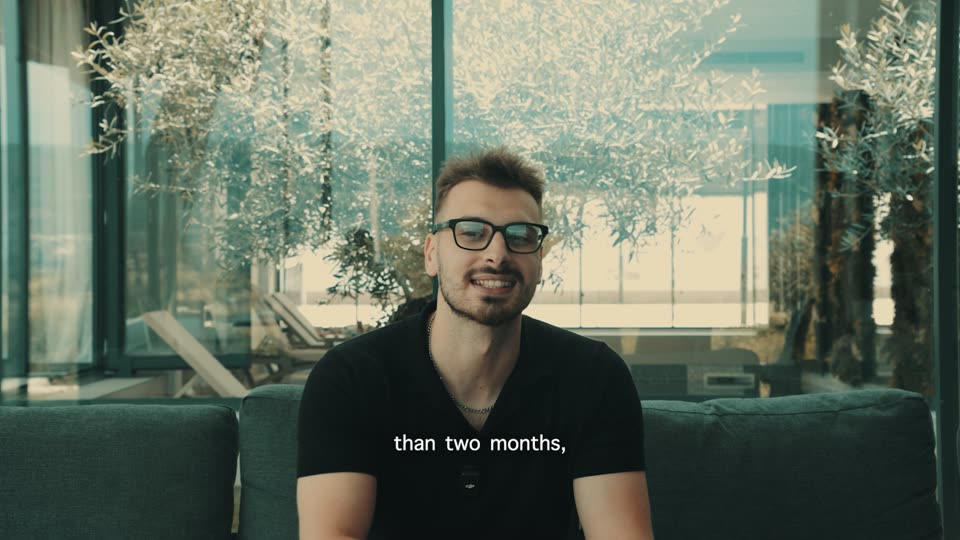 Ilija AndrićFounder, Behavio Group
#What B2B lead generation for founders really means
B2B lead generation for founders is the work of turning buying signals into booked sales calls before a competitor reaches the same buyer. I am Ilija Andrić (founder of Behavio Group, a B2B lead generation and appointment-setting firm), and I write this as the operator who runs these campaigns, not as a marketer describing them. Most founders treat lead generation as a list problem, so they buy more names and wonder why reply rates fall. We treat it as a supply chain with a clock attached.

Think of every prospect as carrying an expiry date. The hours between when someone signals intent and when your email lands in their inbox is the single variable that moves reply rates most, and almost nobody measures it. A name scraped from a static database has no signal date at all, which is why it reads like junk mail. Our entire method, event-based lead sourcing (capturing in-market buyers at conferences), exists to shorten that gap to days.
The phrase we live by is plain: meetings sourced live, never bought. A buyer who paid to attend a company-formation expo last week has made a purchase decision you can act on, whereas a database record made no decision and never will. That difference is the whole game, and it explains why this playbook starts with where the signal comes from rather than how many emails go out.
#Where the leads come from: the resale clock
Our leads come from the floor of an industry conference, captured while a list broker has not yet repackaged that same audience. List brokers buy attendee data, clean it, and resell it to dozens of vendors over the months after an event. That resale window is the gap we exploit. We attend the events your buyers attend, capture who is working the floor, and run outbound while the signal is fresh and the inbox is not yet saturated with identical pitches.
A conference badge is a behavioral signal a firmographic filter cannot replicate. Industry, headcount, and geography tell you a company exists; a scanned badge tells you a named person chose to spend money and time being in a buying context this month. That is the difference between a list and a lead. Our deeper breakdown of what is event-based lead sourcing walks the full mechanism, but the short version is that we pick the buying context first and let the contact list fall out of it.
One example sets the standard we hunt for. A company-formation expo we worked drew roughly 400 incorporation buyers against a thin vendor presence, so the roster converted hard because almost everyone on it could actually buy. That buyer-to-vendor ratio is the test, and most events fail it.
#Who this model fits, and the $5,000 rule
This model fits founders whose single closed deal clears $5,000, because below that line the cost of fresh data and a human funnel never pays back. Event tickets, enrichment, deliverability infrastructure, and human appointment setting carry real per-contact cost, unlike a scraped list sold for fractions of a cent. So one client's deal value has to clear the floor comfortably, which rules out most low-ticket products.
Company-formation firms qualify because incorporation, banking, and annual compliance retainers stack into five-figure relationships. iGaming (online gambling operators and suppliers) companies qualify because operator and supplier contracts run large and the buying circle stays small enough to map by name. Both verticals concentrate their buyers at predictable annual conferences, which is precisely what event sourcing needs to function. We build the target definition against your real deal math first; our guide to defining an ICP for high-ticket outbound shows the filters we apply before anyone writes a subject line.
The ideal customer profile (a written definition of the accounts worth contacting) is an economic gate before a marketing one. Picture a formation firm selling a $4,000 setup that predictably bills compliance work every year after. The first sale alone misses the floor, but the expansion revenue clears it, which changes who qualifies.
Reply and bounce figures are from real anonymized Behavio Group campaigns; meeting range is our typical operating range across tiers.
#How the pipeline runs end to end
Running the pipeline means moving a name through five owned stages, source, enrich, write, send, and set, each with one owner and one measurable handoff. Nothing sits waiting for someone to remember it, because every stage hands the next a defined artefact: a captured contact, a verified record, an approved sequence, a sent campaign, a booked call.
- Source: buy tickets, work the floor, and capture in-market attendees while the event is live and the signal is fresh.
- Enrich: append verified work email, role, and firm data so the message reaches the right person, not a guess.
- Write: build cold-email sequences (permission-light outbound by email) matched to the buyer's context and event.
- Send: isolate domains, warm them slowly, and watch bounce as the leading indicator of trouble.
- Set: human appointment setting books qualified calls directly onto the founder's calendar.
Deliverability protects every stage downstream of it, because one careless blast can burn a sending domain for months. We isolate domains, ramp volume slowly, and treat bounce rate as an early warning rather than a lagging report. When you want the booking mechanics in depth, our piece on how to book qualified sales meetings covers the throughput math by tier and event calendar.
Enrichment is where the pipeline politely fails closed rather than open. Some attendees use personal addresses or sit behind gatekeeper inboxes we cannot verify.
#Build the function in-house or outsource it
Outsourcing wins on cost and speed for most founders below a full sales team, because one fully-loaded SDR is expensive to fund and slow to ramp. A US SDR (sales development representative) runs roughly $70,000 to $110,000+ per year (general industry range) once you add ramp time and turnover, and you need several before the headcount even resembles a functioning team.
The honest framing is a cost structure versus a system. A single hire carries 100% of your concentration risk: if that one person quits, the ramp clock resets to zero and pipeline stops. Outsourcing is the better choice when you want appointments this quarter rather than after a six-month hiring cycle, whereas building in-house makes sense later, once volume is proven and you want the capability under your own roof. Our full breakdown of in-house SDR vs outsourced appointment setting runs the numbers side by side. Rent the capability now if your deal flow is still lumpy, then own it once it turns predictable.
| Factor | In-house SDR | Behavio Group (outsourced) |
|---|---|---|
| First-year cost | $70,000-$110,000+ per rep | From $42,000/yr (Tier 1) |
| Time to first meeting | 3-6 months (hire plus ramp) | Weeks |
| Lead source | Usually bought or scraped lists | Live event-sourced attendees |
| Concentration risk | One person carries all of it | Spread across our team |
| Deliverability infrastructure | You build and maintain it | Included |
#What B2B lead generation for founders costs and returns
Pricing runs from $3,500 to $17,500 a month depending on how much of the funnel you hand us, and the return runs from 80 to 500+ qualified appointments a year. Each tier adds capability rather than raw volume, so you pay for depth where your own team is thinnest, not for a bigger number on an invoice.
| Tier | Monthly | Annual | Scope added |
|---|---|---|---|
| Tier 1 | $3,500 | $42,000 | Sourcing, enrichment, deliverability, cold email, appointment setting |
| Tier 2 | $9,000 | $108,000 | Adds content, pre-call nurture, and a video sales letter |
| Tier 3 | $17,500 | $210,000 | Adds onboarded closers and full closing (3-month minimum) |
Where you land in the 80 to 500+ range depends on offer strength and buyer density, not luck. A sharp offer in a buyer-dense vertical lands near the top; a niche offer in a thin market sits lower, and we tell you which you are before you sign rather than after. Take a $12,000 iGaming supplier contract sold into a tight, mappable buyer circle as the example that lands high. You can review the service tiers in full or book a call to pressure-test the fit against your own numbers. The deciding question stays the same for any founder weighing this approach: is your signal-to-inbox gap measured in days or months?
Bar heights are relative annual cost in thousands USD; SDR figure is a general industry range, not a single quoted salary.
Behavio Group field data
What our own campaigns actually show
On one company-formation campaign we ran 9,361 sends and our best-performing segment replied positively at 47.5%, with bounce held under 1% across the account. When a founder owns the offer and we source the names live from the room, intent does the heavy lifting that a recycled list never can.
“Founders don't have a lead problem, they have a freshness problem: the difference between a name that walked the conference floor this week and one a broker has resold a thousand times is the difference between a booked call and a bounce.”
Ilija Andrić, Founder, Behavio Group
Frequently asked questions
What is B2B lead generation for founders?
B2B lead generation for founders is the work of turning live buying signals into booked, qualified sales calls before competitors reach the same buyers. At Behavio Group we source those signals from industry-conference attendees and run cold email while intent is fresh, rather than buying a static list and guessing at who might be in-market.
Why source leads from events instead of buying a list?
Sourcing leads from events beats buying a list because a paid conference badge is a live buying decision a resold database record cannot carry. We capture attendees and run outbound inside the gap before list brokers repackage that same audience, so reply intent stays high when we make first contact.
How much does Behavio Group cost?
Behavio Group costs $3,500 per month at Tier 1 ($42,000/yr for sourcing through appointment setting), $9,000 at Tier 2 ($108,000/yr, adding content, pre-call nurture, and a VSL), and $17,500 at Tier 3 ($210,000/yr with a three-month minimum, adding onboarded closers and full closing).
How many qualified appointments will I get in a year?
Qualified appointments range from 80 to 500+ per year, set by your tier, market density, and offer strength. A sharp offer in a buyer-dense vertical lands near the top of that range, a niche offer in a thin market sits lower, and we tell you which before you sign.
Should I hire an in-house SDR instead?
Hire an in-house SDR only once volume is proven and you want the function under your own roof. A fully-loaded US SDR runs roughly $70,000 to $110,000+ per year (general industry range) plus a 3-6 month ramp, whereas outsourcing books meetings within weeks from as little as $42,000 a year.
From Ilija Andrić, Founder, Behavio Group
Want this running for your offer?
Book a 30-minute call and we'll map the events worth working for your ICP, then quote you.
Book a 30-min call →