
What is event-based lead sourcing?
Event-based lead sourcing captures in-market buyers at industry conferences before list brokers resell them. This guide explains the mechanism, the reply-rate edge over recycled databases, and where the approach breaks down.
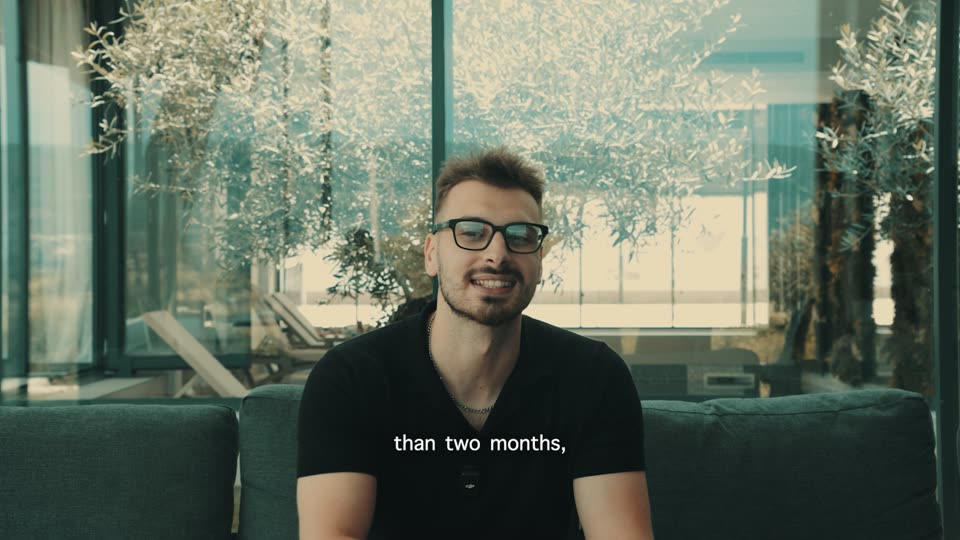 Ilija AndrićFounder, Behavio Group
#What is event-based lead sourcing?
Event-based lead sourcing is an outbound method that originates your prospect list from a specific industry event, then runs cold email to those buyers before the same audience is repackaged and resold. The mechanism is provenance, not scraping. At Behavio Group (a B2B lead generation and appointment-setting firm) we buy tickets to the conferences where a client's buyers gather, capture in-market contacts at the source, enrich them, and launch outbound while the event is still recent. A contact lands on your list because of a documented action this month, not because a vendor logged an address two years ago.

Most outbound runs the supply chain backward. A team licenses a static database, filters it, and then tries to guess who might be shopping. Event-based lead sourcing flips the inputs: the buying context comes first, and the names are a byproduct of that context. We summarize the whole stance as "meetings sourced live, never bought," and it anchors the wider B2B lead generation for founders approach we run.
Two facts travel with every event-sourced contact that no purchased record carries: where the identity originated, and how recently the person did something that signals a purchase. Those two facts are the entire product. The spreadsheet is just where they live.
That sub-1% bounce is the quiet proof. Bounce rate is a direct readout of how stale a list is, and stale is the resting state of most bought data. Origination keeps the number low without a separate scrubbing pass bolted on afterward.
Example: a SaaS vendor buys a floor pass to a martech summit. We capture 140 attendees who stopped to talk pricing, verify their work emails the same week, and the first email names the booth conversation. That opener is true because it happened, which is why it clears filters a generic blast never would.
#How does event-based lead sourcing build a contact's provenance?
Building provenance comes down to recording a contact's origin and intent at the moment of capture, then protecting both as the record moves toward the inbox. Each stage adds a verifiable fact, and the chain only holds because the previous step happened recently enough to still be true.
- Origin: log who the person is and the exact event, booth, or session where the contact was made, with a lawful basis recorded at capture rather than reconstructed later.
- Enrichment: append verified work email, role, and company firmographics, then validate deliverability so the record is send-ready, not just collected.
- Timing: timestamp the gap between capture and first send, because that interval is the number we work hardest to shrink.
- Exclusivity: confirm the audience has not yet been packaged for resale, which is the window the whole method depends on.
The non-obvious link is timing. The interval between capturing a name and landing in their inbox is the single lever we pull hardest, because an in-market contact is worth most the week of the event and erodes after. Our internal aim is to reach a prospect before any list broker (a vendor that aggregates and resells contact data) has finished repackaging the same crowd, which can run weeks. We guard that window with a fixed pre-launch routine, the mechanics of which live in our cold email deliverability checklist.
Example: a company-formation firm exhibits at a corporate-services expo. We capture 180 founders who are mid-incorporation, enrich to 160 verified work emails inside 48 hours, then launch on day three with an opener that names the event. Replies run well above a cold database because the first line is both true and timely, never a generic spray to an inferred segment.
#Event-based sourcing vs. buying lists from ZoomInfo or Apollo
Event-based sourcing differs from buying lists in one variable: you capture an event-sourced record for a single campaign this month, whereas a ZoomInfo or Apollo record sells to every subscriber running the same filter. ZoomInfo (a B2B contact and firmographic database) and Apollo (a sales-intelligence and outreach platform) are strong tools. They solve a different problem than event sourcing does.
Database platforms win on coverage and speed. Need 40,000 contacts in a category by tomorrow morning? That is precisely what they are engineered for.
The cost surfaces downstream. The same records reach every competitor who runs an identical query, so by the time your email arrives the prospect has often absorbed a dozen near-identical pitches. That fatigue never shows on the export, and it shows everywhere in the reply rate.
| Variable | Event-based sourcing | Database list (ZoomInfo / Apollo) |
|---|---|---|
| Origin control | You captured it for this campaign | Aggregated and licensed to all subscribers |
| Freshness at send | Days to weeks old | Often months to years old |
| Buying intent | Anchored to a recent in-market action | Inferred from firmographics and web signals |
| Volume ceiling | Bounded by the event calendar | Effectively unlimited |
| Cost per usable contact | Higher: ticket, capture, enrichment | Lower per record |
| Best fit | High-ticket offers at $5,000+ deal size | Broad market mapping, low-ticket volume |
Choose event-based sourcing when your deal size pays for the per-contact premium and reply quality outranks raw volume. Choose a database when you need wide, cheap coverage and your offer can absorb a low conversion rate. Most of our clients run both: Apollo to map the total market and research accounts, event sourcing for the names that get the first send. The platforms answer who exists; the event answers who is moving.
- 1Capture at the eventLog the person and the exact booth or session where the contact was made, with a lawful basis recorded on the spot.
- 2Enrich within 48 hoursAppend verified work email, role, and firmographics, then validate deliverability so the record is send-ready.
- 3Timestamp the gapMeasure the interval from capture to first send: the single lever we work hardest to shrink.
- 4Confirm exclusivityVerify the audience has not yet been packaged for resale: the window the whole method depends on.
- 5Launch by day threeShip the first sequence while the event is still fresh, with an opener that names what the prospect actually did.
How Behavio Group originates and protects an event-sourced contact
#Why does the resale clock decide outbound results?
The resale clock decides results because an audience's exclusivity and a buyer's readiness both decay on the same short timeline, and outbound that ignores either is mailing the average instead of the moment. A contact who walked an industry floor this week is researching, comparing, and budgeting now. The same contact in ninety days has bought, stalled, or moved on, and by then a broker has likely sold that crowd to a dozen senders.
Buying intent (a prospect's active, observable readiness to purchase) sits behind the comparison results we can point to. One campaign hit a 47.5% top reply rate across 9,361 sends with 75 positive replies. Another logged 42.65% positive replies across 9,486 contacts engaged.
Those figures are not a copy trick. They are what happens when the opener references something the prospect did recently enough to still care, sent before the same names were resold into saturation. Relevance is mostly recency wearing a different name.
The operating rule we run by: every day between capture and first touch costs reply rate and bleeds exclusivity, so the job is to compress that gap, not to perfect the file. A good email in week one beats a flawless one in week six. We would rather launch a 90%-clean list fast than a 99%-clean list late, because the late list is no longer exclusively yours.
#Who should use event-based lead sourcing, and who shouldn't?
Event-based lead sourcing pays off only when each closed deal clears $5,000, because originating fresh data per campaign through tickets, capture, and enrichment costs well above querying a stock database. Below that line the math inverts and a cheaper volume play wins. This is a hard rule for us, not a leaning.
Walk the numbers. A fully loaded US sales development rep typically runs $70,000 to $110,000 or more a year (general industry range), before ramp time and turnover. Against that baseline, a sourcing-and-setting engagement that books qualified meetings on a high-ticket offer can return its cost on a single closed deal. The leverage exists only because the deal is large, since a $300 product can never carry the sourcing premium.
You fit well when you sell into a vertical with a real conference circuit. We go deep in iGaming and company formation, where the events are dense and the economic buyer is reachable on the floor. You fit poorly when your buyers never gather, your deal size is small, or you need a fixed contact volume every week regardless of the calendar. Compare the models honestly using our breakdown of how to source leads at industry conferences before committing budget.
| Your situation | Better choice |
|---|---|
| Deal size $5,000+, buyers attend events | Event-based sourcing with full-funnel outbound |
| Deal size under $5,000, broad market | Database list run at volume |
| Need a total-market map first | Database for research, events for the first send |
| No conference circuit in your niche | Signal-based sourcing or referrals, not events |
#How Behavio Group runs event-based lead sourcing end to end
Behavio Group's model keeps event-based lead sourcing inside one in-house chain rather than a string of vendors, which is how the timing between floor and inbox stays measured in days. A team of six, building outbound for high-ticket B2B since 2019, owns sourcing, enrichment, deliverability, copy, and appointment setting under one roof. Nothing sits in a handoff queue between companies, so the record never ages while it waits for the next vendor to start.
Three service tiers map to how much of the funnel you want handled. Tier 1 at $3,500/month covers sourcing, enrichment, deliverability, cold email, and appointment setting. Tier 2 at $9,000/month adds content, pre-call nurture, and VSL support. Tier 3 at $17,500/month, on a three-month minimum, adds onboarded closers who run the calls end to end. Outcomes range from 80 to 500-plus qualified appointments a year depending on tier, market, and offer.
The honest constraint: this is not an always-on lead faucet. Sourcing tracks the event calendar, so names arrive in concentrated bursts around the conferences worth working, not as a flat daily drip. We plan around that rhythm on purpose, layering enrichment and nurture between events to keep pipeline moving. To see which tier fits your offer, the service tiers spell out exactly what each includes, or book a call and we will map the events worth working for your market and quote a number against your event-based lead sourcing economics.
Real anonymized Behavio Group campaign figures, not industry averages
Behavio Group field data
What our own campaigns actually show
Across our event-sourced campaigns, bounce rate reads as a direct gauge of list age: when contacts are captured and verified at send time rather than aged through resale, we typically see bounce hold under 1% without a separate scrubbing pass. In one anonymized run, 5,899 sends produced 91 replies while bounce stayed sub-1%.
“An event-sourced contact is worth most the week of the show; every day you wait to send, a broker is reselling the same crowd to a dozen competitors.”
Ilija Andrić, Founder, Behavio Group
Frequently asked questions
Is event-based lead sourcing the same as buying a conference attendee list?
Event-based lead sourcing differs from buying an attendee list because the value lives in originating the contact yourself and sending before resale, not in owning the roster. A purchased attendee list is already exclusivity-dead, since the organizer or a broker has sold it to everyone running the same offer. We attend, capture, enrich, and launch inside the window where the contact is still in-market and has not yet absorbed ten competing emails. The provenance and the timing are the product, the spreadsheet is just the container.
How is event-based lead sourcing different from intent data on ZoomInfo or Apollo?
Intent data on ZoomInfo or Apollo is modeled probability, whereas event-based lead sourcing is a recorded action you control. Platforms infer intent from anonymized web activity and topic surges, then sell that signal to every subscriber tracking the same topic. A person on a conference floor spent money and travel to be there, which is a behavior, not a forecast. We use platform intent to prioritize accounts and database records for research, but the names we send to first come from the event itself.
Why does event-based lead sourcing only work for $5,000-plus deals?
Event-based lead sourcing requires a $5,000-plus deal because originating fresh data through tickets, floor capture, and enrichment costs far more than querying a stock database that already holds the record. Below that line a cheaper high-volume list wins on math. Above it, the higher reply quality plus a single closed deal more than covers the sourcing premium. The leverage is entirely a function of deal size, which is why we hold it as a hard rule rather than a preference.
How fast can you launch outbound after an event?
Outbound launches within days of an event, because compressing the gap between capture and first send is the variable that moves reply rate most and preserves exclusivity. We typically enrich and verify within 48 hours and ship the first sequence by day three, while the event is still fresh in the prospect's memory and before brokers resell the crowd. The one exception is deliverability: when sending infrastructure is not warmed, we delay a few days to protect the channel, since a fast send into a spam folder reaches no one.
What results has event-based lead sourcing actually produced?
Event-based lead sourcing has produced reply and deliverability figures from real anonymized Behavio Group campaigns: 5,899 sends to 91 replies at under 1% bounce in one case, a 47.5% top reply rate across 9,361 sends in another, and 42.65% positive replies while engaging 9,486 contacts in a third. These are client campaign numbers, not industry averages. They hold because one team controls capture, deliverability, and copy, and because the opener references something the prospect did recently enough to still care.
From Ilija Andrić, Founder, Behavio Group
Want this running for your offer?
Book a 30-minute call and we'll map the events worth working for your ICP, then quote you.
Book a 30-min call →