
From reply to booked call: the appointment-setting pipeline
The path from a positive reply to a booked call is a defined pipeline: qualify, respond fast, propose times, and confirm. This guide details each stage and the response-time thresholds that protect conversion.
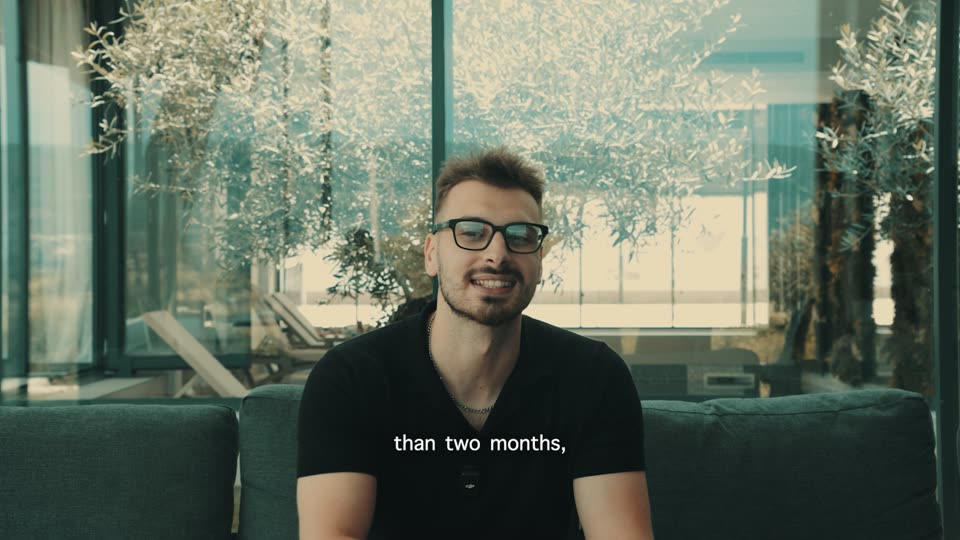 Ilija AndrićFounder, Behavio Group
#What the appointment-setting pipeline actually is
The appointment-setting pipeline is the defined sequence that turns a positive email reply into a confirmed call on a founder's calendarthrough four gates: triage, qualification, time proposal, and confirmation. Most teams treat a reply as the finish line. We treat it as the starting gun. At Behavio Group (a B2B lead-generation and appointment-setting firm sourcing leads live from industry events), the work between "sounds interesting" and a held meeting is where most pipeline leaks out.

Think of it less as a funnel and more as a control system with a clock running on every input. A reply enters, a setter classifies it, qualifies it, proposes times, and confirms the slot, each step carrying its own threshold for how fast it must happen. Miss a threshold and the prospect cools. Hit them all and a casual "tell me more" becomes a Tuesday at 2pm.
This sits downstream of two things we cover elsewhere: writing cold email copyand the throughput math behind booking qualified meetings. Here we stay inside the reply-to-booked-call corridor and detail the mechanics of each handoff.
One example of the leak we are closing: a prospect replies "what does this cost?" at 9:14am, the setter answers at 4:50pm, and the prospect has already booked a competitor's demo. The reply was fine. The pipeline was not. An edge case worth flagging is the over-eager reply, the prospect who books before you have qualified them, which we handle below.
#Stage one: triage every reply before you celebrate
Triage sorts each reply into a bucket within minutesbecause the next action differs entirely by type. Not every response is interest, and treating them identically wastes the window on the ones that count. A setter's first job is classification, not response.
We run a simple taxonomy. Positive (wants to talk), conditional (interested but with an objection or question), referral ("talk to my colleague"), and negative (no, unsubscribe, or out-of-office). Each routes differently, and the only one that starts the booking clock immediately is positive, with conditional close behind once the objection clears.
| Reply type | Signal | First action | Clock |
|---|---|---|---|
| Positive | Asks about price, timing, or a call | Qualify plus propose times in one message | Under 60 min |
| Conditional | Interested but raises an objection | Answer the objection, then propose times | Under 2 hours |
| Referral | Points you to another person | Thank, ask for a warm intro, restart on the referee | Same day |
| Negative | No, unsubscribe, or auto-reply | Suppress or diarize the bounce-back date | No clock |
What makes triage work is a shared inbox view where a setter sees replies in real time, not a daily digest. A real campaign of ours logged 91 replies across 5,899 sends with under 1% bounce. At that ratio a daily batch would have left dozens of in-market prospects waiting overnight, which in practice means losing a meaningful share of them.
#Stage two: speed to lead is the conversion lever
Speed to lead, the elapsed time between a prospect's reply and your first human response, answers in-market interest inside one business hourbecause the value of an interested message decays measurably with every hour it sits. This metric outperforms almost any copy or targeting change once your messaging already earns replies. The prospect who wrote you was, for that moment, leaning in. Hours later they have moved on to the next tab.
The reason is attention, not etiquette. A buyer who fires off "what's the cost?" is doing it between meetings, on a phone, with five other things open. Reach them while that window is open and you ride existing momentum. Reach them tomorrow and you are restarting a cold conversation, this time with a person who half-remembers you.
- A reply lands and is triaged within minutes of arrival.
- The setter drafts a qualifying-plus-proposing response, not a holding reply.
- The first human response goes out inside 60 minutes during business hours.
- After hours, a queued response sends at the start of the next business window, not 18 hours later.
- A follow-up cadence kicks in if no booking happens within 48 hours.
One operational artefact we use: the response-time threshold is a hard service level, not an aspiration. Setters work in a window where replies are visible and a response under an hour is the default expectation. This is also why founders running outbound solo struggle, the replies arrive while they are on calls, and the clock runs out unattended.
- 1TriageSort the reply (positive, conditional, referral, negative) within minutes and start the clock on real interest.
- 2Speed to leadFirst human response under 60 minutes in business hours, while the buyer is still leaning in.
- 3QualifyLight fit and authority check inside the reply before a slot is offered; hold the $5,000+ deal-size line.
- 4Propose + confirmOffer two or three specific times, lock one, then send an instant invite and a day-before reminder.
Each stage carries its own response-time threshold; miss one and the prospect cools.
#Stage three: qualify before you hand over a slot
Qualification filters on offer fit and decision authority firstso the founder spends time on calls that can close, not on curiosity. This step (confirming a reply matches your ideal customer before booking) is the gate that separates volume from value. A calendar full of unqualified calls is worse than an emptier one, because it burns the scarcest resource the founder has.
We qualify lightly inside the reply itself, never with an interrogation. Two or three embedded signals usually settle it: does the prospect's company clear the deal-size floor where this offer makes sense, does the person have buying authority or sit one step from it, and is there a live reason now rather than someday. For high-ticket work the economics only hold above a $5,000 deal-size line, which is why fit-checking is non-negotiable.
The deeper handoff mechanics, what a setter passes to a closer and how BANT-style notes travel, live in high-ticket appointment setting. Inside this pipeline, qualification is the lighter act of deciding whether to offer a slot at all.
- Fit: company profile and deal size match the ICP, not just the industry.
- Authority: the replier decides, influences, or can introduce the decider.
- Timing: a trigger event or stated need makes now plausible.
- Intent quality: a specific question beats a vague "interesting" every time.
#Stage four: propose times, then confirm the call
Calendar booking offers two or three specific slots inside the reply and confirms the chosen one within minutesbecause a bare scheduling link adds a decision the prospect can defer. Locking a confirmed time on the founder's calendar is where momentum is either banked or lost. "Here's my link" versus "does Tuesday 2pm or Wednesday 10am work?" is the difference between a maybe and a held slot.
The mechanism is choice reduction. A link asks the prospect to open it, scan a grid, weigh their week, and decide. That is four small frictions, each a place to abandon. Two concrete options ask for a one-word answer. We still send the link as a fallback for the prospect who wants to self-serve, but the proposed times lead.
| Booking method | Prospect effort | Typical outcome |
|---|---|---|
| Bare scheduling link only | Open, scan, decide alone | Higher drop-off, slower booking |
| Two or three proposed times | Reply with one choice | Faster lock, less back-and-forth |
| Proposed times plus link fallback | Pick a slot or self-serve | Best of both, our default |
Confirmation is its own stage, not an afterthought. Once a slot is set, an immediate calendar invite plus a short reminder the day before protects the meeting from the calendar amnesia that drives no-shows. Skip the confirmation sequence and you quietly lose a chunk of meetings you already earned. To run this on your offer, you can book a call with us, or see the service tiers first.
#Run the pipeline yourself or hand it off
Running the pipeline in-house works while reply volume is low and the founder can watch the inbox; hand it off once replies arrive faster than they can be answered inside an hour. The deciding factor is not skill, it is attention. This system rewards constant presence on the inbox, and that is exactly what a founder selling a high-ticket offer cannot give it.
What founders underestimate is the labor density of stages one and two. Triaging, qualifying, proposing, and confirming across dozens of live replies is a full role, not a between-meetings task. One campaign of ours engaged 9,486 contacts with a 42.65% positive rate, a reply flow no part-time inbox check survives. When the booking clock is missed at that scale, the cost is invisible: meetings that simply never get set.
We run this stage as a managed service inside our tiers, with setters on the inbox during business hours and a response-time floor under an hour. Here is the honest build-versus-buy call. Outsource this function first once your offer clears the deal-size line and replies are outrunning your response time, because every hour of delay inside the appointment-setting pipeline is a booked call you will never see.
Real anonymized campaign figure plus honest operating ranges from our inbox.
Behavio Group field data
What our own campaigns actually show
Across our campaigns the reply-to-booked-call gap is won or lost on speed, not copy. On one event-sourced campaign that engaged 9,486 contacts at a 42.65% positive-reply rate, the inbox moved faster than any part-time check could survive, and the meetings that never got set were the ones answered hours late, not the ones answered badly.
“A positive reply is not a meeting; it's a clock starting, and every hour you leave it unanswered is a booked call you'll never see.”
Ilija Andrić, Founder, Behavio Group
Frequently asked questions
What is an appointment-setting pipeline?
An appointment-setting pipeline is the defined sequence that converts a positive email reply into a confirmed sales call, through four stages: triage the reply, qualify the prospect, propose specific times, and confirm the slot. Each stage has a response-time threshold, and the goal is a held meeting on the calendar, not just an interested reply.
How fast should you respond to a positive reply?
Responding to an in-market positive reply should happen within 60 minutes during business hours, because reply value decays measurably with every hour it sits unanswered. Speed to lead, the gap between the prospect's reply and your first human response, moves more booked meetings than almost any change to copy or targeting once your messaging already earns replies.
Should you send a scheduling link or propose times?
Proposing two or three specific times inside the reply works better than a bare scheduling link, which should be offered only as a fallback, because a link adds steps a prospect can defer. Concrete options reduce the decision to a one-word answer, which locks the slot faster and cuts the back-and-forth that lets momentum cool.
Why do booked calls turn into no-shows?
Booked calls turn into no-shows mainly because no confirmation sequence protects them after the slot is set. An instant calendar invite plus a short day-before reminder is the cheapest defense in the pipeline, and skipping it quietly erases a measurable share of the meetings you already earned.
When should a founder outsource the appointment-setting pipeline?
Outsourcing the appointment-setting pipeline makes sense once positive replies arrive faster than they can be answered within an hour, since the pipeline rewards constant inbox presence a founder selling a high-ticket offer cannot sustain. The deciding factor is reply volume and response time, not the difficulty of the work itself.
From Ilija Andrić, Founder, Behavio Group
Want this running for your offer?
Book a 30-minute call and we'll map the events worth working for your ICP, then quote you.
Book a 30-min call →